Able Eyes + AbleVu: A Better Way to Plan Accessible Visits
Evan Winters, President/CEO of Able Eyes
“Is your business accessible?”
It sounds like a simple question. But the answer depends on who is asking.
A wheelchair user may need details about entrances and restrooms. A parent of an autistic child may want to preview the space and learn about sensory supports. Someone with food allergies needs different information altogether.
A simple “yes” rarely tells the whole story.
That is why we believe Able Eyes and AbleVu.com offer the strongest combination available today for helping people understand a place before they visit.
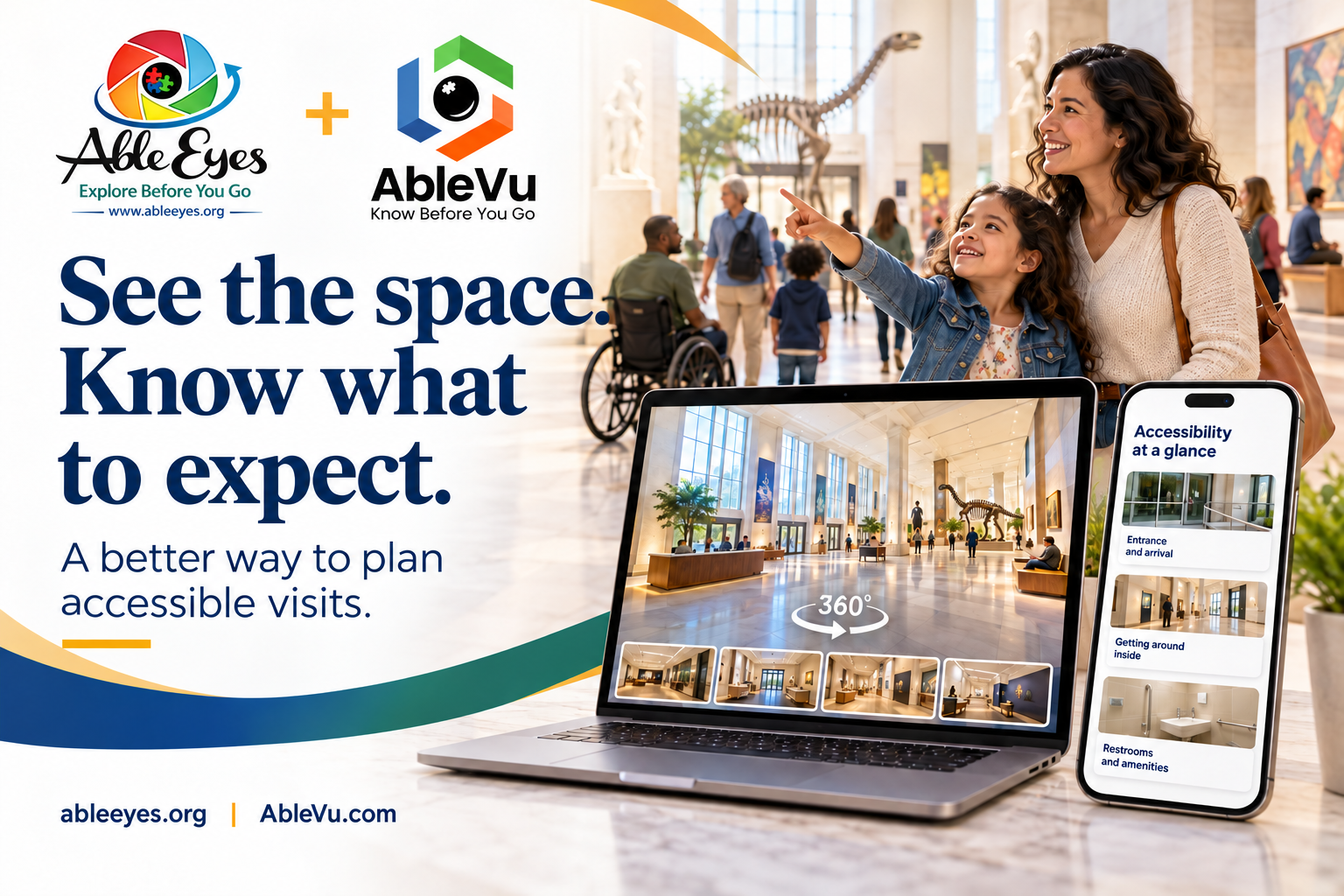
Able Eyes lets people see the space. AbleVu brings accessibility details and information from multiple sources together in one location.
And AbleVu is FREE for visitors to use and for businesses to create or claim an accessibility profile.
See the space before you arrive
An unfamiliar place can come with a lot of questions.
Where do I park? Which entrance should I use? What happens after I walk through the door?
Able Eyes 360° virtual tours let visitors explore at their own pace. They can look around, follow routes through a building, and revisit areas as often as they need.
For a child preparing for a museum visit, that might mean exploring the lobby with a parent. For a patient, it might mean becoming familiar with a clinic before an appointment. For a job applicant, it might mean seeing the workplace before an interview.
That opportunity to prepare can make a first visit feel more familiar.
Get the details that pictures cannot answer
A virtual tour provides valuable context. Visitors also need specific information about the features and supports available.
AbleVu brings those details together through accessibility profiles that can include photos, virtual tours, audio tours, and documents.
Together, the two platforms help answer:
What is this place like, and will it work for me?
Someone can explore an entrance through an Able Eyes tour, then review the available accessibility information on AbleVu. A family can preview a restaurant’s layout while checking the details relevant to their visit.
Visitors get more information to make decisions based on their own needs.
Accessibility goes beyond mobility
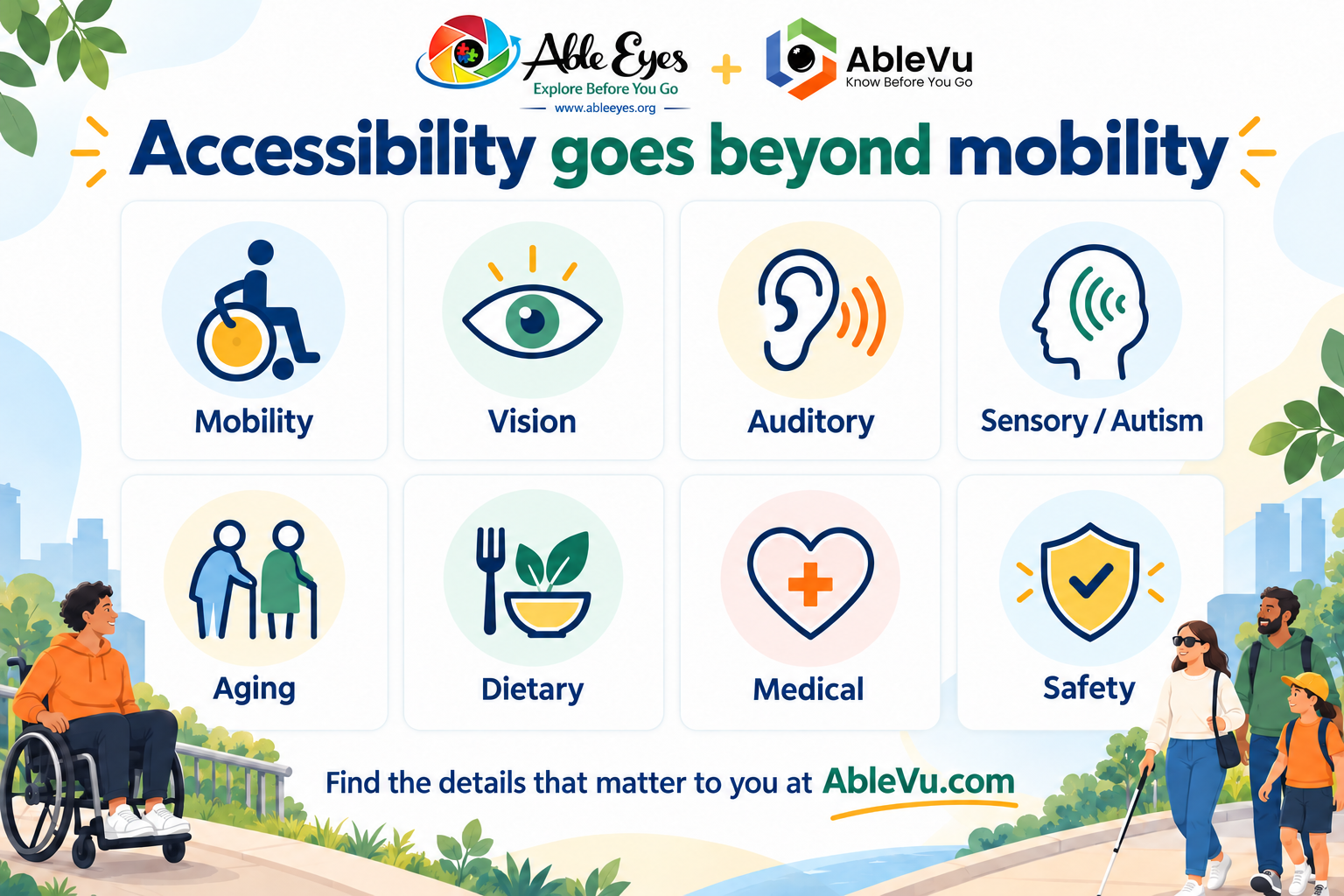
AbleVu encompasses eight accessibility categories:
- Mobility: Information that helps people plan how they will enter and move through a space.
- Vision: Details relevant to visitors who are blind or have low vision.
- Auditory: Information relevant to visitors who are Deaf or hard of hearing.
- Sensory / Autism: Details that help people anticipate an environment and prepare for unfamiliar experiences.
- Aging: Information that helps older adults and those accompanying them plan around their needs.
- Dietary: Information that supports planning around food needs and restrictions.
- Medical: Details relevant to planning a visit around health-related needs.
- Safety: Information that helps visitors consider their safety needs before arriving.
These needs often overlap. One family or travel group may be considering several categories when choosing where to go.
Available information varies by location. The goal is to help people find useful details, identify unanswered questions, and decide what works for them.
Information from accessibility partner organizations, together in one place
Planning one outing should not require searching five different websites.
Accessibility organizations offer valuable information, but visitors may have to move between several programs to build a picture of a location.
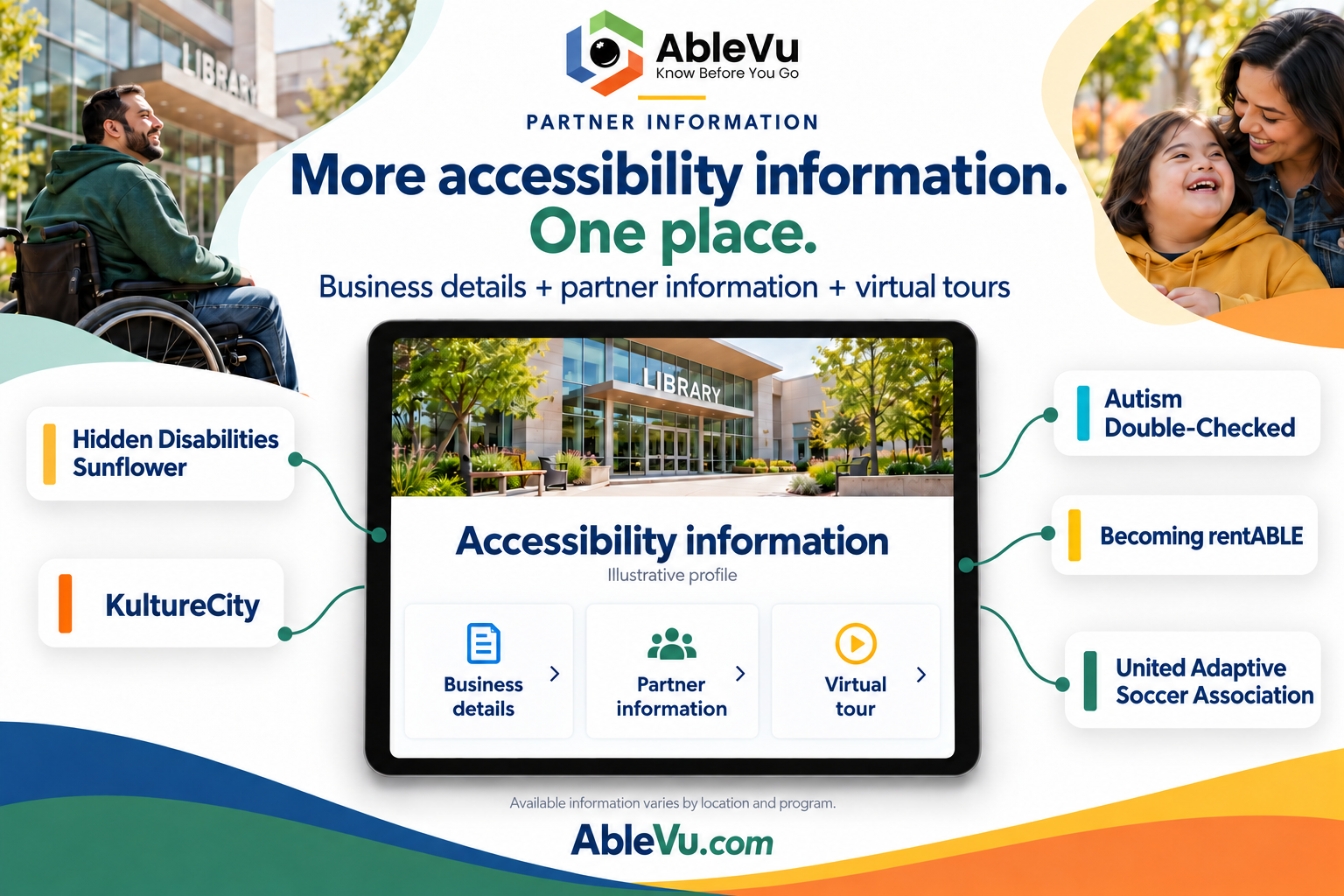
AbleVu brings available partner information together with business details, community contributions, and virtual tours.
Recognized partner programs listed on AbleVu include:
- Hidden Disabilities Sunflower
- KultureCity
- Autism Double-Checked
- Becoming rentABLE
- United Adaptive Soccer Association
Each program has its own focus and scope. Information about a location’s participation can help visitors understand the supports or resources they may want to explore further.
AbleVu labels information by its source, helping people understand where a detail came from. Participation in one program does not mean a location meets every accessibility need.
The benefit is having more of the information needed to plan a visit together in one place.
Add an Able Eyes virtual tour, and visitors can see the environment while reviewing the details that matter to them.
Better information helps the whole group
Think about choosing a restaurant for six people.
One person needs a step-free entrance. Another needs a quieter environment. Someone else has a dietary restriction.
Those needs can influence where the entire group goes.
When a business shares clear accessibility information, it helps everyone involved make a plan. The same applies to a family choosing a hotel, a teacher organizing a field trip, or friends deciding which attraction to visit.
For businesses, this is an opportunity to answer questions earlier and help more people feel prepared to visit.
For visitor bureaus, chambers, and community organizations, it is a practical way to help people explore an entire destination.
AbleVu is FREE. Start with what you know.
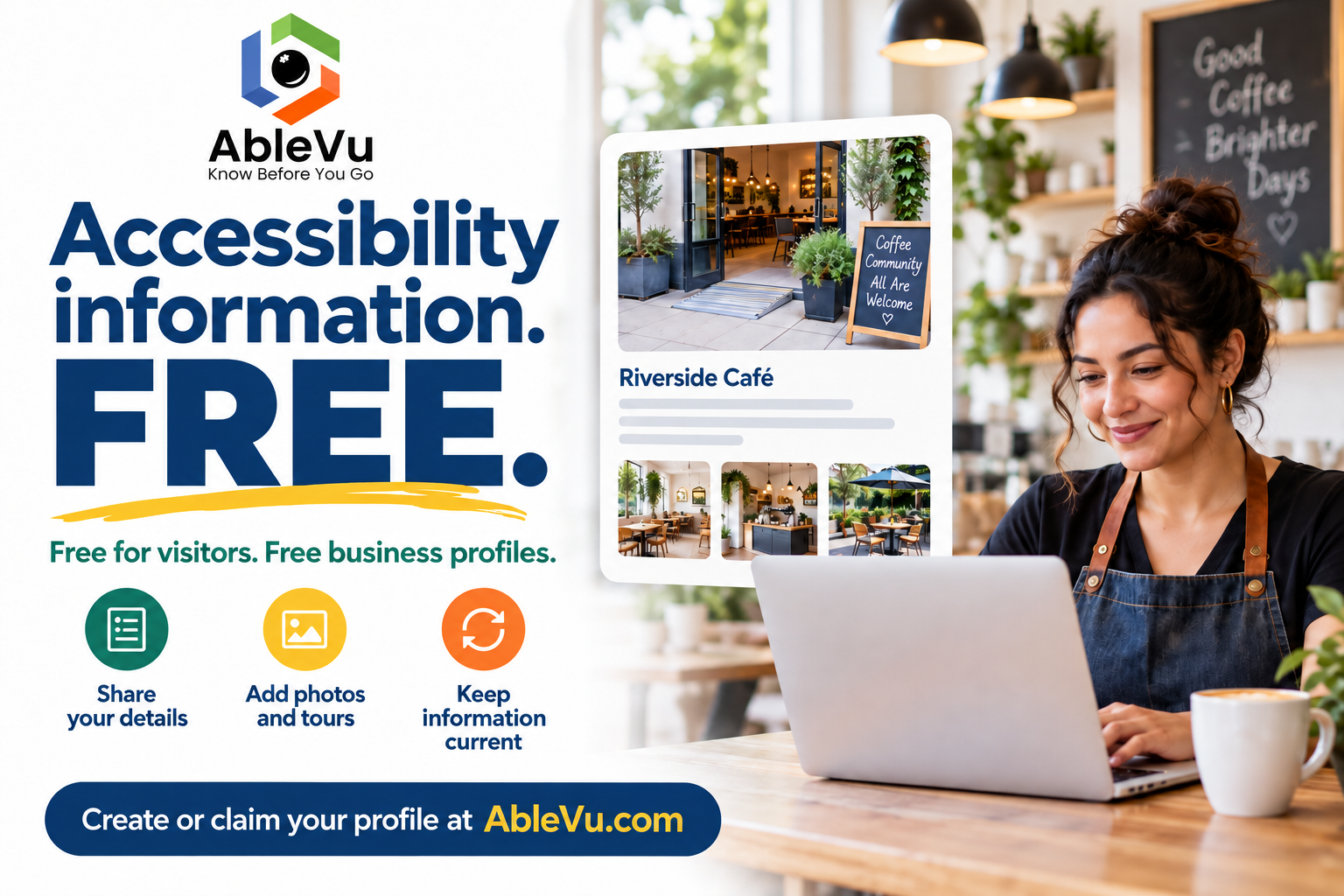
Businesses can create or claim an AbleVu accessibility profile at no cost. Visitors can use the platform for free, too.
Free business profiles support accessibility information, unlimited photos with accessibility tags, virtual tours, audio tours, and document uploads such as menus, sensory maps, and floor plans.
You do not need an Able Eyes tour to get started.
Share accurate information about your location, be clear about limitations, and update your profile when things change. You do not need to have every answer to begin making useful information available.
An Able Eyes virtual tour is a separate paid service that adds a visual experience to your profile and gives you content to share through your website and Google presence.
More information. More confidence. More opportunity to participate.
Accessibility needs are personal. People deserve the information to make their own decisions.
An Able Eyes tour helps visitors become familiar with a place. AbleVu brings together accessibility details and available information from businesses, partner organizations, and the community.
Together, they make it easier to explore, prepare, and ask any remaining questions before arriving.
That is why we believe this combination is so powerful.
Explore before you go. Know before you arrive.
Explore virtual tours at www.ableeyes.org.
Create or claim your FREE accessibility profile at AbleVu.com.
To discuss an Able Eyes virtual tour for your business or community, email info@ableeyes.org.